
Daily Living & Fine Motor Skills
Building the Skills Children Need for Everyday Success
Everyday tasks like dressing, eating, writing, and using school supplies help children build confidence and independence. When these skills become difficult, children can feel frustrated, avoid participating in daily activities, or struggle to keep up with everyday routines.
At Momentum Therapy, every treatment plan is personalized to your child's unique strengths, goals, and daily routines. Through engaging, play-based occupational therapy, we strengthen fine motor development, improve daily living skills, and help children gain the confidence to participate more independently at home, at school, and throughout everyday life.

Everyday Tasks Shouldn't Feel Like Everyday Struggles
Children develop at different rates, but ongoing challenges with self-care or fine motor skills may affect far more than a child's ability to complete a task. They can influence confidence, classroom participation, social interactions, and willingness to try new activities.
Your child may have difficulty with:
With the right support, these everyday challenges can become meaningful opportunities for growth.
Practical Therapy That Builds Real-Life Skills
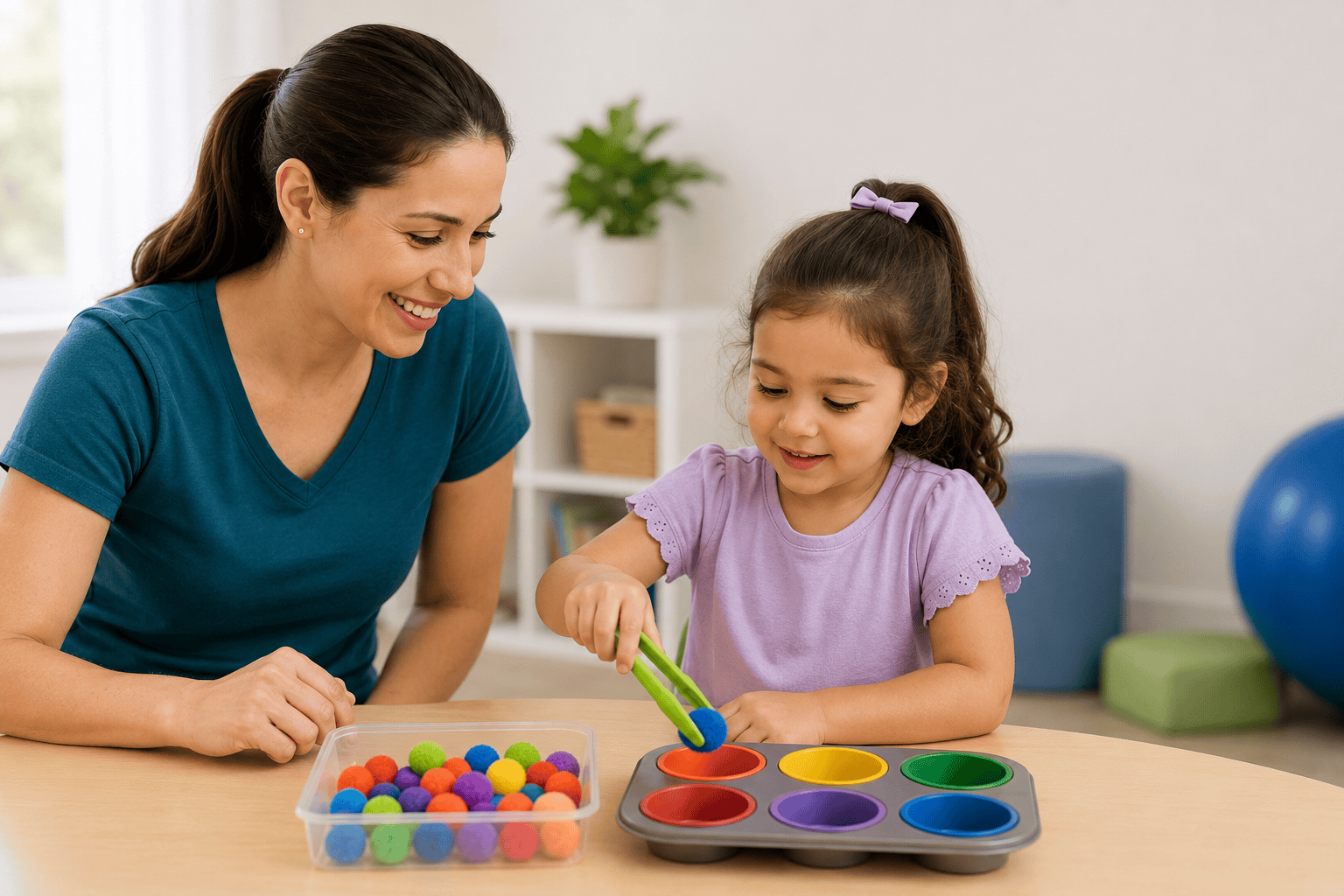
Every therapy session is designed around meaningful activities that help children become more successful at home, in school, and throughout everyday life. By practicing real-world tasks in a supportive environment, children build confidence, independence, and the ability to participate more fully in daily routines.
Treatment may focus on improving:
Our goal isn't simply to complete exercises. It's to help children become more capable, more independent, and more confident every day.
Small Milestones Often Lead to Big Confidence
For a child, successfully buttoning a shirt, writing their name, tying a shoe, or finishing a meal independently can feel like a major accomplishment. Those everyday victories often build self-esteem, reduce frustration, and encourage children to take on new challenges with greater confidence.
We partner closely with parents and caregivers by providing practical strategies that continue supporting progress long after each therapy session ends. Together, we help children develop lifelong skills that promote greater independence at every stage of growth.
Independence Starts One Skill at a Time
Every new skill creates another opportunity for confidence to grow. Our therapists celebrate every milestone because even small successes can make a meaningful difference in a child's daily life.
Questions Parents Often Ask
Frequently Asked Questions
Some children naturally catch up over time, but persistent challenges with fine motor skills or everyday self-care can affect confidence, independence, and success at home and school. An evaluation helps determine whether your child simply needs more time or would benefit from early intervention.
Yes. Occupational therapy addresses the foundational skills needed for handwriting and fine motor development, including hand strength, coordination, pencil grasp, visual-motor integration, posture, and attention. As these skills improve, everyday tasks often become easier and more enjoyable.
Your child's evaluation includes observation, age-appropriate assessments, and a conversation about your child's daily routines, strengths, and challenges. We then develop an individualized treatment plan with goals that are meaningful for your child and your family.
Yes. Parent involvement is an important part of successful therapy. We'll provide practical strategies and simple activities you can incorporate into everyday routines to reinforce the skills your child is building during therapy and encourage continued progress between visits.
Verified Google Review
What our clients say
"They are amazing! They have treated my daughter with development delays! She wouldn’t be where she is today without the help and love they’ve shown not just my daughter but our entire family! They are the best there is!"
- Amelia W. -
Mother of Momentum Therapy Client

Insurance & Benefits
Momentum Therapy accepts SoonerCare, TEFRA, all Oklahoma Medicaid managed care plans, including Humana Healthy Horizons, Aetna Better Health, and Oklahoma Complete Health, as well as most major commercial insurance plans, including Blue Cross Blue Shield, HealthChoice, Aetna, Cigna, WebTPA, and many others.
If you don't see your insurance listed, please contact us. We'll be happy to verify your benefits and determine whether Momentum Therapy is in network with your specific plan.
Priority scheduling is available following hospital discharge. We work closely with families and referring providers to help ensure a smooth transition from the hospital to home, school, or community-based occupational therapy.
Ready?
Let's Help Your Child Thrive

Whether your child needs support with sensory processing, fine motor development, daily living skills, or everyday confidence, we're here to help.
Together, we'll create a personalized plan that encourages growth, celebrates progress, and helps your child thrive at home, at school, and beyond.